
Go-karting is often about speed, competition and adrenaline, but have you ever thought about how much fuel a go-kart uses? Fuel consumption is a significant factor in both operation and sustainability, and it depends on everything from engine size to driver technique.
At Racehall, we work hard to optimize fuel consumption while minimizing our environmental impact. We use Aspen fuel in all our karts – a sustainable solution that improves both performance and air quality. In this article, we dive into kart fuel consumption and how you can optimize it.
Main points
- Go-karts typically use 1-2 liters of fuel per hour, depending on engine size and driving style.
- Racehall uses Aspen gasoline to reduce emissions and create a healthier environment.
- Good driving techniques and regular maintenance can improve fuel economy.
- You can experience sustainable go-karts at Racehall – read more about the models here: Racehall go-kart models.
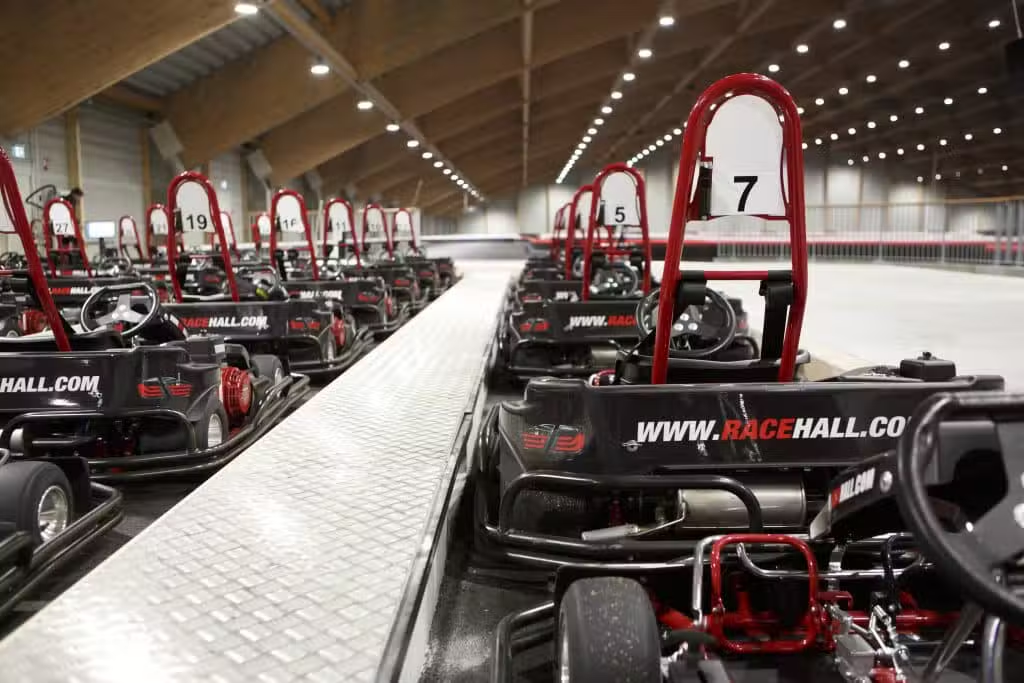
What is the fuel consumption of the go-kart?
How much fuel does a typical go-kart use?
An average go-kart uses between 1-2 liters of fuel per hour. Hobby karts with smaller engines (e.g. 200cc) are at the low end of the spectrum, while competition karts with larger engines and higher performance can use more.
How does go-kart usage compare to other vehicles?
Although go-karts use less fuel than cars in absolute terms, their fuel consumption per kilometer is often higher due to high-performance engines and intensive driving.
Factors affecting fuel consumption
1. Engine size and performance
- Small engines generally use less gasoline than larger racing models.
- Competition karts are often optimized for high performance, which can increase consumption.
2. Driving technique and speed
- Aggressive driving styles with rapid acceleration and braking can significantly increase fuel consumption.
- Smooth accelerations and a more stable driving style can help save fuel.
3. Track conditions and length
- Longer courses with many turns require more energy, which can increase consumption.
How Racehall works for sustainability
Using Aspen gasoline
At Racehall we use Aspen gasoline in all our karts. Aspen is an environmentally friendly gasoline that reduces CO2 emissions and contains fewer harmful substances such as benzene and sulphur. This not only creates a more sustainable solution, but also improves engine performance and longevity.
Read more about our go-kart models and sustainability here: Racehall go-kart models.
Go-karts with a focus on efficiency
Our go-karts are designed with advanced technology to ensure optimal performance with minimal environmental impact. For example, they are equipped with weight equalization and hydraulic brakes to ensure a more efficient ride.
Tips to optimize fuel consumption
1. Improve your driving technique
- Avoid sudden braking and acceleration.
- Keep a steady speed through the turns.
2. Maintain the engine
- Ensure regular servicing, including cleaning the air filter and adjusting the carburetor.
- Keep the engine clean to ensure optimal performance.
3. Use environmentally friendly fuel
- Aspen gasoline not only reduces emissions, but also ensures more stable and efficient combustion.

The benefits of Aspen gasoline at Racehall
Healthier work environment
- Less harmful emissions create better air quality for both drivers and staff.
Better engine performance
- Aspen gasoline reduces deposits in the engine, extending service life and ensuring stable performance.
Sustainable motorsport
- Using Aspen fuel is an important step towards more sustainable motorsport, prioritizing the environment without compromising the experience.
Conclusion
Go-kart fuel consumption depends on several factors such as engine size, driving style and track conditions. At Racehall, we lead the way when it comes to sustainability by using Aspen fuel in our karts. This not only reduces the environmental impact, but also improves the driving experience for both novice and experienced drivers.
Visit Racehall and discover how sustainability and high performance can go hand in hand on the track.
FAQ
How much fuel does a go-kart use?
Most go-karts use between 1-2 liters of fuel per hour, depending on engine size and driving style.
Can you reduce the fuel consumption of a go-kart?
Yes, by driving more smoothly, maintaining the engine and using environmentally friendly fuel like Aspen.
Is environmentally friendly fuel like Aspen more expensive?
Aspen gasoline is slightly more expensive, but the long-term benefits to the engine and the environment outweigh the cost.
Which go-karts does Racehall use?
Racehall uses go-karts optimized for both performance and sustainability. See the models here: Racehall Go-kart Models.